



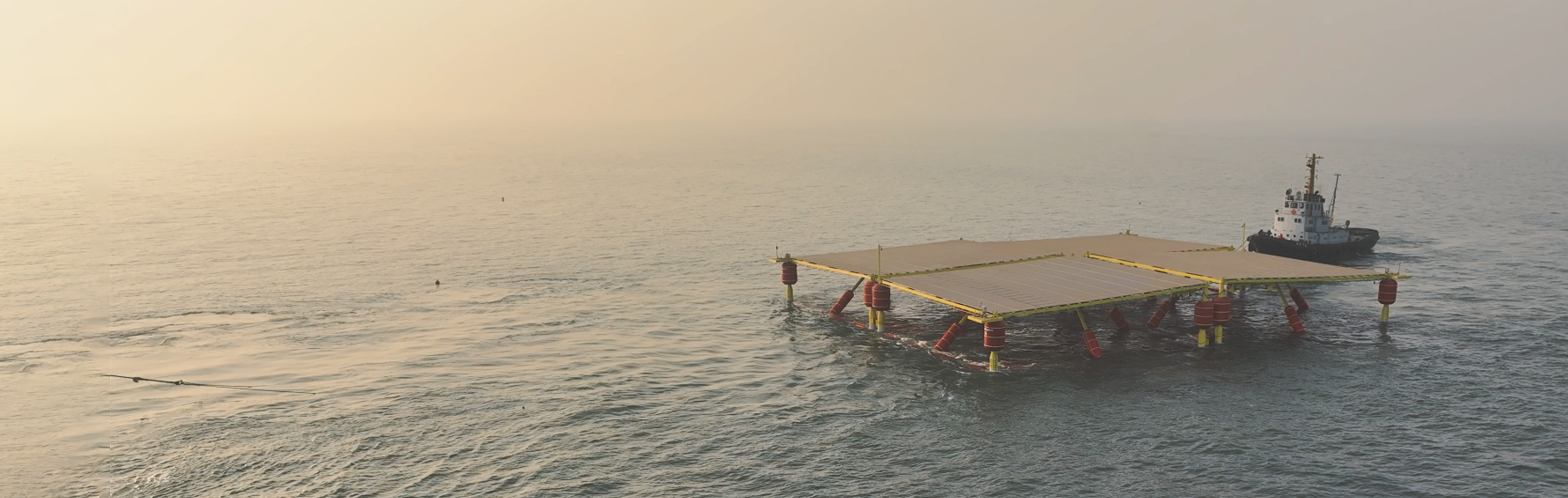
The next wave of solar energy: floating photovoltaic
With the continuous rise of solar,wind and hydroelectric power,the renewable energy industry has ushered in a key development opportunity.According to statistics from the International Energy Agency,in the first quarter of 2020,the share of renewable energy in global power generation jumped to nearly 28%.In the past few years,floating solar energy technology has been one of the most promising innovative technologies by the public.
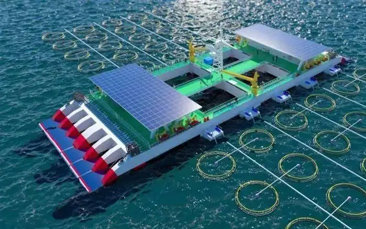
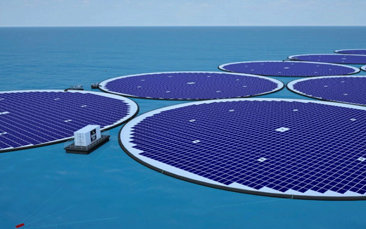
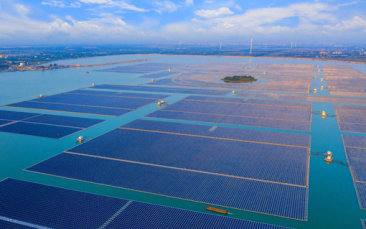
Floating solar energy,also known as floating photovoltaic,refers to the installation of solar panels on a floating platform in water.Water can cool down photovoltaic panels,so it is more efficient to generate electricity than solar power plants installed on land.“Whenever the temperature exceeds 25℃,the efficiency of photovoltaic panels will decrease."Floating solar power plants are particularly suitable for areas with limited land area but high power demand and urgent need for water conservation.For example:irrigation reservoirs,hydropower dams,water treatment facilities,tailings ponds,and even breeding ponds.Photovoltaic panels will also bring multiple benefits to these waters.For example:reduce eutrophication of water bodies,inhibit algae growth,protect water sources,and make better use of water resources.
Advantages of combining floating photovoltaic power generation with hydroelectric power generation
•Make full use of existing transmission infrastructure
•Better cope with the variability of solar energy
•Increase power generation
•Close to the demand market
•Adequate water sources to meet demand
Floating photovoltaic has created new opportunities to enhance solar power generation capacity,especially for countries with high population density and scarce available land.At present,the total installed capacity of floating solar power plants in mainland China,Taiwan,Japan,South Korea and other countries and regions has reached 2,400 MW,which can provide sufficient electricity for 240,000 households.Data show that in just six years,the installed capacity of floating solar energy around the world has increased by 100 times.It is estimated that globally,the construction of floating solar power plants in artificial and natural inland waters alone has a potential total capacity of up to 4 TW.
challenge
Wind,water and wildlife make it difficult to maintain transportation
Although floating photovoltaic power plants have great potential and good development prospects,they also face major challenges.The first major challenge is to build durable photovoltaic power plants.This is different from building a solar farm on the ground.A variety of special factors need to be considered,such as the correct location of the photovoltaic pile,how to fix the photovoltaic pile under the water,and how to deal with the mooring problem.
The second is the operation and maintenance challenge.“It is not as convenient for operation and maintenance as a ground-based solar farm.Both sensors and photovoltaic panels are installed on the island,which poses special challenges to maintenance.”Therefore,operation and maintenance work needs to be carried out by qualified personnel.Operation and maintenance personnel may need to take a boat to a floating platform or island far from land to carry out work.In addition,because it is necessary to ensure the safety of operation and maintenance personnel,weather has also become a limiting factor in this work.For example,it is necessary to monitor wind loads to avoid strong wind operations.

Service hotline
Email:xiaocheng.bi@cimc-raffles.com
Address:No. 33, Keji Avenue, High-tech Zone, Yantai City, Shandong Province

Follow us
Copyright © CIMC Offshore Solar